Recording · Online event · Hosted by University College Dublin (UCD) and TheDiplomat.AI

AI Simulations for the Election of the Next UN Secretary-General

Recording, 63 minutes. It ends during Jeffrey D. Sachs’s closing remarks; the audience Q&A is not included · Watch on YouTube (opens in a new tab)

Date
Thursday, September 17, 2026
Time
9:00 AM Eastern Time 2:00 PM Dublin · 3:00 PM Geneva
Format
Online via Zoom
University College Dublin An Coláiste Ollscoile, Baile Átha Cliath
The Diplomat

As the United Nations prepared to select its next Secretary-General, University College Dublin and TheDiplomat.AI hosted a unique online event exploring the election through AI-powered diplomatic simulations.

The event brought together a distinguished international panel with perspectives spanning Europe, Latin America, Africa, Russia and Eurasia, the United States, and the UN multilateral community in New York.

At the center of the discussion were TheDiplomat.AI’s artificial intelligence models representing the five Permanent Members of the UN Security Council — China, France, Russia, the United Kingdom and the United States. The models are designed to simulate how different countries may approach complex diplomatic and geopolitical decisions.

Vuk Jeremić opened the discussion by describing an election held in a geopolitical recession. After TheDiplomat.AI presented the simulation results, the panel analyzed and challenged them, discussing where the AI accurately — or inaccurately — captured the interests, priorities and perspectives of the P5.

Antonio de Aguiar Patriota asked whether AI could tell from past statements which candidate would be the strongest defender of the UN Charter. Hugh Dugan offered a US perspective and listed what a model cannot see: classified intelligence, unpredictability, deception and signaling. Igor Yurgens gave a reading of how Russia and China would choose.

Richard Gowan said the simulation seemed to be getting “pretty close to what we think is going on, even though it may be wrong on some of the specifics”, and cautioned that some permanent members might rather open the race to new candidates than fall back on lower preferences. Dr. Jean Narcisse Djaha said that African leaders want the next Secretary-General to rebuild trust. Jeffrey D. Sachs closed on multipolarity, a flawed selection process and using AI to raise the truth content of public diplomacy.

Chapters (links open YouTube in a new tab)

  1. 0:00 Patrick Paul Walsh: welcome and where the idea came from
  2. 2:39 Disclaimers: these are AI avatars, and AI can be wrong
  3. 5:45 Vuk Jeremić: an election in a geopolitical recession
  4. 11:38 David Gorodyansky: why TheDiplomat.AI was built
  5. 14:36 How the AI diplomats were built, and peace gaming
  6. 18:52 Video: how one negotiation simulation works
  7. 21:22 Demo: which candidate each P5 model would veto
  8. 23:29 First and second choices: a compromise name emerges
  9. 25:25 Final tally: Grynspan, Rodrigues Birkett, Espinosa
  10. 28:58 Antonio de Aguiar Patriota: who defends the UN Charter?
  11. 34:43 Hugh Dugan: the US view, secrecy and deception
  12. 37:53 Igor Yurgens: how Russia and China would choose
  13. 42:40 Richard Gowan: does this match the real straw polls?
  14. 46:48 Dr. Jean Narcisse Djaha: Africa asks for trust
  15. 53:24 Jeffrey D. Sachs: multipolarity and a flawed process
  16. 56:51 Jeffrey D. Sachs: using AI for truth in diplomacy

Moderator & Panelists

Jeffrey D. Sachs

UN & Sustainable Development — New York
  • Director, Center for Sustainable Development, Columbia University
  • President, UN Sustainable Development Solutions Network
  • Former Special Adviser to three United Nations Secretaries-General

Jeffrey D. Sachs served as Special Adviser to three United Nations Secretaries-General, Kofi Annan, Ban Ki-moon and António Guterres, from 2002 to 2018. He advised them on the Millennium Development Goals and then on the Sustainable Development Goals. He directed the UN Millennium Project (2002–2006) and chaired the World Health Organization Commission on Macroeconomics and Health (2000–2001).

Sachs is University Professor at Columbia University and Director of its Center for Sustainable Development. He co-founded the UN Sustainable Development Solutions Network with Secretary-General Ban Ki-moon in 2012, has led it ever since and is today its President. He is also an SDG Advocate appointed by Secretary-General Guterres. He directed Columbia’s Earth Institute (2002–2016) and chaired The Lancet COVID-19 Commission (2020–2022).
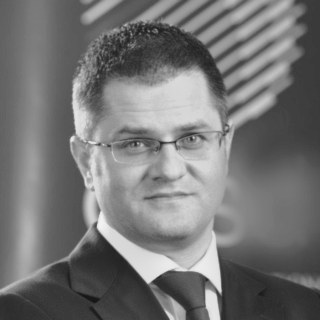
Vuk Jeremić

Europe — Serbia
  • Former President of the United Nations General Assembly
  • Former Minister of Foreign Affairs of Serbia
  • President, Center for International Relations and Sustainable Development (CIRSD)

Vuk Jeremić served as President of the 67th Session of the United Nations General Assembly and as Serbia’s Minister of Foreign Affairs from 2007 to 2012. During his tenure as Foreign Minister, he represented Serbia extensively at the United Nations and in international diplomatic forums around the world.

In 2016, Jeremić was an official candidate for Secretary-General of the United Nations, finishing second after six rounds of Security Council voting. He is currently President of the Center for International Relations and Sustainable Development (CIRSD) and Editor-in-Chief of Horizons – Journal of International Relations and Sustainable Development.

David Gorodyansky

Host — Geneva
  • Founder & Chairman, TheDiplomat.AI

David is the founder and chair of TheDiplomat AI, a Swiss non-profit initiative focused on using AI for diplomacy. Previously David was the co-founder and CEO of AnchorFree. David built AnchorFree into a global leader in consumer privacy with more than 650 million user downloads globally. AnchorFree played a role in some of the world’s most important events protecting millions of people from security and privacy breaches.

AnchorFree was selected by Forbes among America’s Most Promising Companies and among the Most Important Security Start-ups by Business Insider. FastCompany named AnchorFree as the world’s most innovative security company. David raised $63M from Goldman Sachs and other investors, before selling the Company for $310M. David has been profiled among America’s Most Promising CEOs by Forbes, profiled by Fortune and the New York Times, awarded the Ernst & Young Entrepreneur of the Year Award and named one of the 100 Most Intriguing Entrepreneurs by Goldman Sachs.

Patrick Paul Walsh

Moderator — Ireland / Europe
  • Professor of Global Affairs and Sustainable Futures, University College Dublin
  • Director, UCD M.Sc. in Sustainable Development

Patrick Paul Walsh is Professor of Global Affairs and Sustainable Futures at University College Dublin and Director of the UCD M.Sc. in Sustainable Development, delivered with the SDG Academy. He is a member of the Leadership team of SDSN All Ireland.

He is a former President and current Vice President of the Statistical and Social Inquiry Society of Ireland (SSISI), where stakeholder meetings focus on evidence-based public policy. He holds a PhD in Economics from LSE and has held roles at Trinity College Dublin, KU Leuven, Harvard, Columbia, SDSN, the UN, European Commission, IMF and World Bank.

Antonio de Aguiar Patriota

Latin America — Brazil
  • Ambassador of Brazil to the United Kingdom
  • Former Minister of Foreign Affairs of Brazil

Antonio de Aguiar Patriota was appointed Ambassador to the United Kingdom of Great Britain and Northern Ireland in 2023. Previously, he served as Minister of Foreign Affairs of Brazil (2011–2013), Ambassador to the United States (2007–2009) and as Permanent Representative of Brazil to the United Nations (2013–2016). He was Ambassador of Brazil to Italy (2016–2019) and to the Arab Republic of Egypt (2019–2023).

Among his publications are “The UN Security Council after the Gulf War” (1998) and two volumes of “Speeches, articles and interviews” during his period as Foreign Minister. He published in 2025 a collection of essays in the English language entitled “A Humanist Foreign Policy for a Multipolar World”. Ambassador Patriota is a member of the “Leaders for Peace” initiative under the chairmanship of former French Prime Minister Raffarin.

Richard Gowan

UN & Multilateral Affairs — New York
  • Program Director, Global Issues and Institutions, International Crisis Group

Richard Gowan is Program Director for Global Issues and Institutions at the International Crisis Group and one of the leading analysts of the United Nations and multilateral diplomacy. He previously served as Crisis Group’s UN Director, overseeing its engagement with diplomats and UN officials in New York.

Gowan has worked with the European Council on Foreign Relations, New York University’s Center on International Cooperation and the Foreign Policy Centre in London. He has taught at Columbia University’s School of International and Public Affairs and Stanford in New York and has advised organizations and governments on UN political affairs, peace and security, migration and multilateral diplomacy.
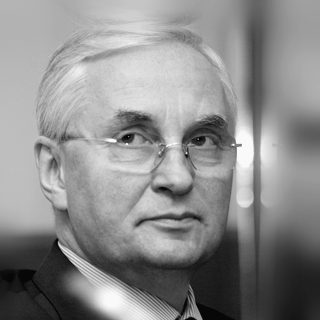
Igor Yurgens

Russia & Eurasia
  • Director, MGIMO Centre for Sustainable Development and ESG Transformation

Igor Yurgens is Director of the Centre for Sustainable Development and ESG Transformation at MGIMO University in Moscow. An economist and prominent Russian policy expert, he has held senior roles spanning international affairs, business, finance and public policy.

Yurgens is also Chairman of the Board of Directors of Rating Agency Expert RA, a member of the Management Board of the Russian Union of Industrialists and Entrepreneurs, a member of the Board of Trustees of the Russian International Affairs Council, and participates in international policy institutions including the International Institute for Strategic Studies and the Centre for European Reform. Earlier in his career, he worked with UNESCO’s Directorate for External Relations and Cooperation.

Dr. Jean Narcisse Djaha

Africa — Côte d’Ivoire
  • Chair, Reform UN Forum 2026
  • President & Global Executive Chair, African Council on Foreign Relations

Dr. Jean Narcisse Djaha is an Ivorian international relations scholar, strategic advisor and leader of the African Council on Foreign Relations (ACFR), an organization focused on strengthening Africa’s voice in global diplomacy and international decision-making.

His work spans international strategy, diplomacy, global governance and technology policy, with a particular focus on strengthening African participation in the institutions shaping the international system. Through ACFR, he leads and supports initiatives connecting African policymakers, scholars and institutions with counterparts across Europe, Latin America, the Middle East and the wider international community. He also serves as Chair of Reform UN Forum 2026.

Hugh Dugan

United States — New York
  • President, Multilateral Accountability Associates
  • Distinguished Fellow, Center for UN and Global Governance Studies, Seton Hall University
  • Former US Delegate to the United Nations

Hugh Dugan spent 26 years in the US delegation to the United Nations in New York, where he served as US Delegate and Senior Adviser to eleven US Permanent Representatives. He was the delegation’s senior expert on elections to UN membership bodies and a lead negotiator for US delegations to the Peacebuilding Commission and the Economic and Social Council. He also advised on the selection of the Secretary-General.

In 2019 and 2020 he returned to government as Principal Deputy and Acting Special Presidential Envoy for Hostage Affairs at the State Department and as Senior Director for International Organization Affairs at the National Security Council. He is now President of Multilateral Accountability Associates and a Distinguished Fellow at Seton Hall University’s School of Diplomacy and International Relations, where he has taught UN politics, UN reform and Security Council issues.

What the simulations showed

In the simulated Security Council rooms shown at the event, run in September 2026 (on 14 and 15 September) on TheDiplomat.AI:

  1. Asked which candidate each permanent member would most likely veto, the US model named Michelle Bachelet, the Chinese and Russian models Rafael Grossi, the UK model Macky Sall and the French model Ivonne A-Baki.
  2. The five permanent members’ models named four different first choices, but all except the US model put Carolyn Rodrigues Birkett second — which the presenter read as a possible compromise.
  3. With the question setting five candidates aside as likely to draw a veto (the veto room had named four of them), the personas of all 15 Council members chose among Rebeca Grynspan, Carolyn Rodrigues Birkett and María Fernanda Espinosa: Grynspan led on first preferences (10 of 15), and Rodrigues Birkett was in every member’s top two.

The rooms used AI personas built from public sources, not the real diplomats or governments, and their results are not a prediction.

How the simulations held up

The simulations ran in September, before any of these polls. Between the event and 2 November 2026 the Security Council held five straw polls: on 18 and 29 September and on 7, 16 and 30 October. The Council does not publish the results, so every real figure below comes from press reports of the closed ballots. Only the 16 October ballots were color-coded, which shows whether a vote came from a permanent or an elected member, not which country cast it. The two are not like for like either: a simulated room recorded each delegation’s first and second choice, while a straw poll marks every candidate encourage, discourage or no opinion.

  1. Matched on who leads

    The rooms said in SeptemberWith every candidate on the table, Rebeca Grynspan was the first choice of 5 of the ten elected members (the most in that room) but of only 1 of the five permanent members; 10 of 15 once the question cut the field to three names.

    What happenedShe had the most encourage votes in all five polls (9, 10, 9, 9 and 11). But on 16 October two permanent members discouraged her, and on the plain ballots of 30 October it is not known whether any of her four discourage votes came from a permanent member.

  2. Missed

    The rooms said in SeptemberOur follow-up question treated the veto room’s four names as vetoes, also set aside Olara Otunnu, and treated Grynspan, Carolyn Rodrigues Birkett and María Fernanda Espinosa as three finalists no permanent member would block.

    What happenedOn 16 October every candidate drew at least two discourage votes from permanent members: Grynspan 2, Rodrigues Birkett 2, Espinosa 3.

  3. Missed

    The rooms said in SeptemberRodrigues Birkett as the compromise: the second choice of 4 of the 5 permanent members, and in all 15 delegations’ top two in the full-Council room.

    What happenedShe had 8 encourage votes in four of the five polls but fell to 5 on 7 October. On 16 October three permanent members encouraged her and two discouraged her, the same split as Grynspan, and on 30 October Rafael Grossi passed her, 9 encourage votes to 8.

  4. Can’t tell

    The rooms said in SeptemberThe veto map: as each permanent member’s most likely veto, the US persona named Michelle Bachelet, the Chinese and Russian personas Rafael Grossi, the UK persona Macky Sall and the French persona Ivonne A-Baki.

    What happenedOn 16 October the other three each drew discourage votes from permanent members (A-Baki five, Sall three, Grossi two), but so did every other candidate, and Grossi still had 8 encourage votes that day and 9 on 30 October. Bachelet withdrew in September, before any color-coded ballot. Which permanent member voted how is not public.

  5. Partly: she led, but the elected members were split

    The rooms said in SeptemberThe ten elected members concentrate on Grynspan: first choice of 5, second choice of the other 5.

    What happenedAccording to one press report, five elected members discouraged her on 7 October. On 16 October the elected members’ ballots gave her 6 encourage (tied with Grossi for the most), 3 discourage and 1 no opinion.

  6. Matched

    The rooms said in SeptemberNobody qualifies yet: the full-Council room would put a name forward only with nine votes and no permanent member against, and named nobody.

    What happenedOn 16 October no candidate had nine encourage votes and no discourage vote from a permanent member; the plain ballots of 30 October cannot show it. No one had been recommended by 2 November, as was already the case when the rooms ran.

In short: the rooms picked the front-runner, and missed how widely the permanent members would object once the ballots were color-coded. That nobody had qualified was already true on 17 September.

Michelle Bachelet announced her withdrawal on 19 September and Macky Sall on 17 October. On 21 October the United Arab Emirates nominated Lana Nusseibeh, who drew 7 encourage, 6 discourage and 2 no opinion in her first straw poll on 30 October. On 1 November Türkiye nominated Feridun Sinirlioğlu.

Read the room-by-room analysis

All six simulated rooms with their transcripts, as they stood on 17 September 2026

About TheDiplomat.AI

TheDiplomat.AI is a Geneva-based non-profit initiative using artificial intelligence to support diplomacy, dialogue and peace.

TheDiplomat develops AI models and simulation tools designed to help diplomats, policymakers, researchers and institutions explore how different countries may view international issues, simulate negotiations, test geopolitical scenarios, and identify potential areas of disagreement, compromise and consensus.

The election of the next UN Secretary-General provides a timely real-world opportunity to explore how these technologies can be used to better understand the interests and decision-making of countries involved in one of the United Nations’ most consequential diplomatic processes.

About the initiative